

Adding a second storey is one of the most transformative renovations you can make to an Ontario home. It creates major square footage, boosts property value, and allows families to stay in their neighbourhood while expanding their living space.
But homeowners often underestimate how complex second-storey additions truly are.
Common Misconceptions About Second Storey Additions
Many homeowners begin with assumptions such as:
“I already have drawings, so I’m ready for a permit.”
“The structure can likely support a second level without major changes.”
“It’s mostly cosmetic—just raising the roof.”
“Any contractor or designer can prepare the drawings.”
However, adding a second storey triggers some of the most significant structural, zoning, and Ontario Building Code (OBC) requirements of any residential project. These projects frequently involve:
Structural load path redesign
Reinforcement of foundation or existing walls
Cathedral ceilings or dormers
Height restrictions and zoning obstacles
Complex roof restructuring
Fire separation requirements
Detailed engineered drawings
Design changes to ensure future additions are possible
This is why a second storey addition requires specialized permit drawings, produced by a design firm deeply familiar with structural engineering, OBC Part 9, zoning bylaws, and multi-phase planning.
Example: Second Storey Addition in Kitchener Designed by MW Drafting & Design
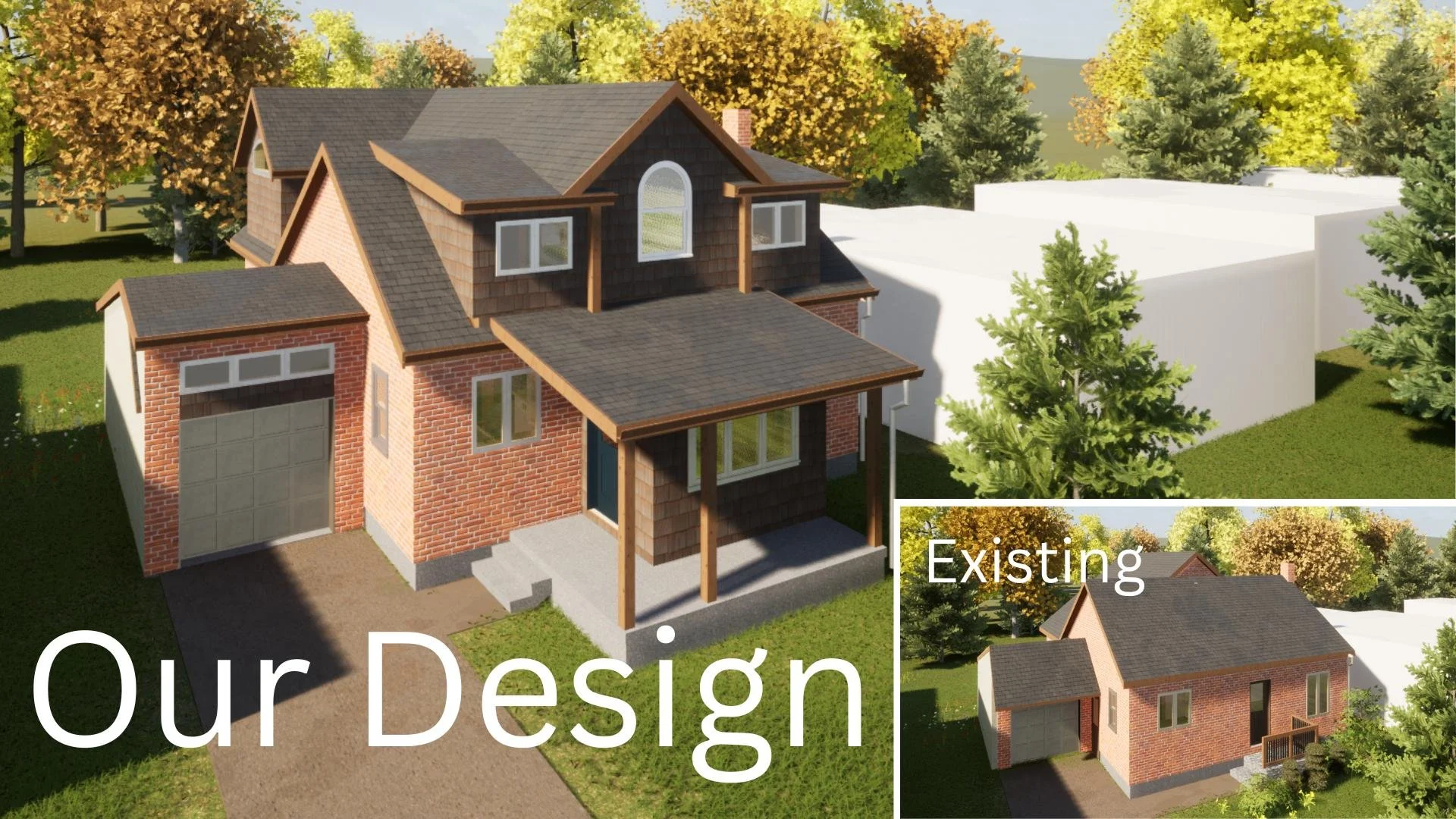
Rendering of proposed second storey addition in Kitchener, Ontario by MW Drafting & Design.
When a homeowner in Kitchener envisioned adding a second storey, they approached MW Drafting & Design to turn their concept into a fully engineered, code-compliant, and build-ready solution.
The project involved major structural modifications, including:
Raising the roof
Designing cathedral ceilings
Adding dormers
Managing multiple structural point loads
Ensuring future expansions could be integrated into the current design
Here’s how MW Drafting & Design transformed a conceptual idea into a smooth, compliant, and construction-ready addition.
Biggest Challenges in Adding a Second Storey to an Existing Home
1. Complex Structural Engineering Requirements
Adding an upper level changes how loads transfer through the house. This often requires:
Engineered steel beams
New point load paths
Reinforced floors or walls
Roof removal and rebuilding
Engineering stamps for structural components
In this example, the design required precise tracking of every structural point load, ensuring both immediate and long-term stability.
2. Adjusting a Preliminary Homeowner Design to Meet Code
The homeowner had initial plans, but many elements needed changes to meet:
Zoning regulations
Height limitations
Ontario Building Code structural requirements
MW Drafting recreated the home in a full 3D Revit model, visually walking the homeowner through issues and presenting an improved, compliant design.
3. Planning for Future Additions
The homeowner wanted future phases, so MW Drafting built these into the engineering and roof design.
This avoided the need for costly structural changes later.
How MW Drafting & Design Creates BCIN Permit-Ready Drawings for Second Storey Additions
MW Drafting uses a proven system for second-storey additions throughout Ontario:
Comprehensive Site & Zoning Review
Every addition starts with a zoning check to confirm:
Maximum building height
Setback requirements
Lot coverage
Floor space ratio
Access and fire safety requirements
Ontario Building Code Compliance
All structural and architectural drawings follow the OBC. This ensures the drawings meet the standards required for:
Structural capacity
Fire safety
Means of egress
Guarding and fall protection
Energy efficiency
Roof and floor loading
Engineered Structural Design
MW Drafting & Design uses in-house engineering software to produce:
Engineered beams
Load-bearing wall specifications
Point load calculations
Roof truss modifications
Foundation reinforcement recommendations
All structural elements are stamped when required.
Full 3D Revit Modelling for Accuracy
This allows the team to:
Identify structural conflicts early
Visualize the new second level
Explain code issues clearly
Improve constructibility
Permit-Ready Drawing Package
A second-storey addition permit set includes:
Existing & proposed floor plans
Roof plans
Elevations
Building sections
Structural layouts
Framing plans
HVAC and mechanical details (as needed)
OBC matrix
Site plan
Engineering documentation
These documents ensure your contractor has exactly what they need for pricing and seamless construction.
Benefits of Proper BCIN Permit Drawings for Second Storey Additions
1. Faster Permit Approval
Clear, compliant drawings reduce revision cycles with the city.
2. Accurate Construction Pricing
Contractors can quote confidently with engineered, detailed drawings.
3. Avoiding On-Site Delays or Surprises
The more complete the drawings, the smoother the build.
4. Long-Term Structural Security
Engineering ensures your home can safely support the new load.
5. Better Design Control
3D modeling allows homeowners to visualize the addition before construction begins.
In the above example, MW Drafting’s drawings provided everything the contractor needed for a seamless build, saving time and reducing errors.
Why MW Drafting & Design Is the Best Choice for Second Storey Addition Drawings in Ontario
MW Drafting provides:
BCIN-certified, Ontario-compliant architectural drawings
In-house engineering for complete structural design
3D Revit modelling for accuracy and clear visualization
Experience completing second-storey additions across Ontario
A collaborative approach with contractors and homeowners
Expert permit submission support
Planning a Second Storey Addition in Ontario? Start With a Free Discovery Call
MW Drafting & Design helps homeowners, investors, and contractors bring second-storey additions to life with clarity, structural engineering, Ontario Building Code expertise and permit-ready precision. Click here to book a free discovery call to get started right away!